
Beidahuang · Huachuan
In the heart of the Sanjiang Plain, with cold-region black soil. Planned processing base and standardised seedling system; a demonstration area for standardised cold-region yam cultivation.
ABOUT US
Verifiable background and clearly stated capability boundaries — so B2B cooperation starts with aligned information.
This platform is operated by Hong Kong Leijun Industrial Co., Ltd. and focuses on standardised cultivation and high-value conversion of medicinal-and-edible botanicals. With the support of the cooperative growing areas and Chinese-medicine resources of the 301 Hospital TCM Herb Cultivation Base (Xinjiang), it plans a complete chain from standardised cultivation and primary processing to intelligent separation, whole-component fermentation and extraction, and high-value products.
According to the Feasibility Study Report, the planned site is in Sujiadian Town, Huachuan County, Jiamusi, Heilongjiang, using the cooperative growing areas of the 301 Hospital TCM Herb Cultivation Base (Xinjiang) and existing plant facilities. Heilongjiang Zhongke Wanxing Agriculture Co., Ltd. and the Beijing–Tianjin–Hebei Green Industry Research Institute provide joint implementation and technical support.
We work to the principles of standardised cultivation, intelligent processing and compliant products, building a closed loop from seedling breeding and field management through raw material storage, deep processing and quality traceability.
COMPANY & BASES
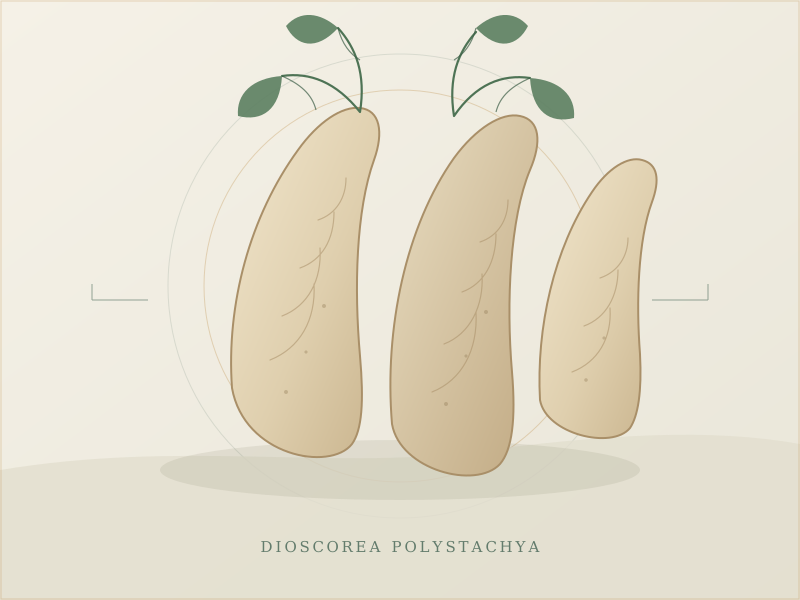
Both yam growing bases — Beidahuang (Huachuan, Sanjiang Plain, Heilongjiang) and the northern foothills of the Kunlun Mountains in Xinjiang — are owned by Hong Kong Leijun Industrial Co., Ltd. The two regions complement each other through cold-region black soil and glacial meltwater irrigation, with 2,000 hectares currently under cultivation.
Company identity, base ownership and the 2,000-hectare figure are provided by Hong Kong Leijun Industrial Co., Ltd. (1 shang = 1 hectare ≈ 15 mu). This describes existing planting scale; the 1,000 t/y in the Feasibility Study Report is a planned processing throughput estimate. The two figures use different scopes and are not interchangeable.
INDUSTRY CHAIN
Seedling breeding, unified protocols, contract growing areas
Harvesting, washing, slicing, drying, storage standards
Targeted fractionation of plant actives
TCM-inspired low-temperature route
Actives, formulated powders, bases and R&D directions
BASE LAYOUT
In the heart of the Sanjiang Plain, with cold-region black soil. Planned processing base and standardised seedling system; a demonstration area for standardised cold-region yam cultivation.
The Pishan–Moyu–Yecheng belt, irrigated by glacial meltwater, provides a green production environment and a stable raw material foundation.
Planning / study stage
1000t
Planned annual raw yam throughput
1003t
Phase I planned output
50
Planned headcount
These figures come from the Phase I economic assessment in the Feasibility Study Report and represent the planning / study stage. The breakdown is 153 t of active fractions, 700 t of formulated nutrition powders and 150 t of food and cosmetic bases. The platform builds on proprietary intelligent separation of plant actives and adds a TCM-inspired fermentation and extraction stage.
TECHNICAL SUPPORT
Proposed joint implementation partner; cultivation and origin organisation
Technical support: active-compound separation and production line design
Cooperative growing areas and Chinese-medicine resource support
ROADMAP
Following the study conclusions: regulatory assessment first, capacity investment second.
Establish raw material processing and food-grade product cash flow
Scale-up, quality standards, stability and fingerprint consistency
Classification first, validation second, registration last; dedicated budget
Compliance notice
Bases, capacity, partners and implementation stages on this page follow the Feasibility Study Report (October 2026). The project is at the planning and phased-implementation stage; this does not imply that all lines, certifications or products are completed or on the market.
Submit your requirement and contact details below. Our team will route it to bulk supply, custom development, joint R&D or contract cultivation.